Motherhood brings meaningful moments, unexpected challenges, and responsibilities that change as children grow. From managing busy mornings to supporting a child’s emotional development, everyday parenting requires patience, flexibility, and practical solutions.
FamousParenting momlife relates to the everyday experiences of motherhood, including raising children, managing family routines, and balancing personal responsibilities. Parents exploring this topic can find practical ideas for organizing daily life, supporting children’s development, and handling common parenting challenges. The most useful advice is realistic, age-appropriate, and suited to each family’s needs.
FamousParenting momlife is a search term associated with motherhood, family life, and parenting-related information. Readers interested in this topic often want relatable advice, useful family routines, and ideas for making daily responsibilities more manageable.
Understanding the topic begins with recognizing that every family has different needs. There is no single parenting routine that works for everyone, but simple habits and reliable information can help mothers make more confident decisions.
What Is FamousParenting Momlife?

FamousParenting momlife is a phrase connected with online discussions about motherhood, raising children, household responsibilities, and the everyday experiences of being a parent.
The term brings together two ideas. Parenting involves guiding children as they grow, while momlife describes the daily responsibilities and personal experiences associated with motherhood.
These experiences can include preparing meals, helping with schoolwork, organizing family schedules, managing difficult moments, and making time for rest. They also include the rewarding experiences of watching children learn new skills and develop their personalities.
The exact meaning of the phrase can depend on the context in which it appears. It should not automatically be interpreted as the name of a verified organization or professional parenting service.
For readers, the main value of exploring this topic lies in discovering practical information that can support everyday family life.
What Does Momlife Mean in Everyday Life?
Momlife describes the everyday realities of being a mother, including the responsibilities, emotions, decisions, and relationships that shape family experiences.
Some days may feel organized and rewarding, while others bring tiredness, unexpected changes, and competing priorities. Both experiences are normal parts of family life.
A mother caring for a baby may focus on feeding, sleep, and recovery. A mother of school-age children may spend more time coordinating school activities, supporting learning, and encouraging independence.
These differences show why parenting advice should consider children’s ages and individual needs.
Social media can sometimes make motherhood appear effortless. However, photographs and short posts rarely show every responsibility behind a family’s daily routine. Comparing an ordinary day with someone else’s carefully selected moments can create unnecessary pressure.
A more helpful approach is to identify what your own family needs and build habits that make daily life easier.
Common Topics Associated With Momlife
Motherhood involves several interconnected areas. Understanding them can help parents identify the information most relevant to their circumstances.
Everyday Parenting Challenges
Children may struggle with bedtime, resist changes in routine, or become frustrated when something does not go as expected. These situations can test a parent’s patience, particularly during an already busy day.
Useful parenting guidance should explain what parents can try and why it may help. General instructions to remain patient are less useful than specific suggestions suited to a child’s age and situation.
For example, a predictable bedtime routine can help children understand what comes next. Calm communication and consistent expectations can also make everyday transitions easier.
Parents should remember that children’s behavior can have different causes. When a concern persists or affects a child’s well-being, seeking individualized professional guidance may be appropriate.
Family Routines and Time Management
Family responsibilities can become easier to manage when recurring tasks follow a simple routine.
Preparing school items the night before, planning a few meals in advance, and keeping appointments in one calendar can reduce last-minute decisions.
Routines should remain flexible enough to accommodate illness, unexpected commitments, and changing family needs. An overly complicated schedule can become another source of stress rather than a solution.
The aim is to make important responsibilities more manageable, not to organize every minute of the day.
Emotional Well-Being
Parenting can involve joy, worry, frustration, and exhaustion. Mothers may experience several of these emotions within a short period, especially when balancing childcare with work or household responsibilities.
Taking a short break, talking to a trusted person, or sharing tasks with another caregiver may help reduce everyday pressure.
Rest should not be treated as a reward that parents must earn after completing every task. Looking after personal well-being can be an important part of maintaining a sustainable family routine.
If emotional distress becomes persistent or overwhelming, professional support may be beneficial.
Children’s Learning and Development
Children develop new abilities as they grow, but the timing and pace of development can vary.
Young children need opportunities to play, explore, communicate, and build relationships. Older children increasingly benefit from age-appropriate responsibilities, opportunities to make decisions, and supportive conversations about their experiences.
Parents can encourage development through ordinary activities such as reading together, preparing simple meals, playing games, and talking about the day.
For developmental concerns, parents should consult qualified professionals rather than relying entirely on general online advice.
How Can Moms Make Everyday Parenting More Manageable?
A practical parenting strategy should fit into real life. Small changes are often easier to maintain than a complete overhaul of the family’s schedule.
Start With One Daily Challenge
Identify the part of the day that causes the most difficulty. It might be getting children ready for school, preparing dinner, or settling down at bedtime.
Choose one small change that addresses that problem.
If mornings are rushed, prepare clothing and bags the evening before. If bedtime becomes unpredictable, establish a simple sequence of calming activities.
Give the new routine time to become familiar, and adjust it if it does not suit your child’s needs.
Set Realistic Expectations
Parents often have several responsibilities competing for their attention. Trying to complete every task immediately can leave little time for rest or meaningful family interaction.
Separate essential tasks from those that can wait. A simple daily priority list may be more useful than an ambitious schedule that is difficult to follow.
A less-than-perfect home or an unfinished task does not mean that someone has failed as a parent.
Encourage Age-Appropriate Independence

Children can gradually participate in family responsibilities as their abilities develop.
Younger children may help put away toys, while older children may organize school materials or assist with simple household tasks.
Give clear instructions, provide appropriate supervision, and recognize effort rather than expecting immediate perfection.
These small responsibilities can help children practise decision-making and develop confidence.
Make Time for Connection
Meaningful family interaction does not always require an elaborate activity.
Reading a story, sharing a meal, listening to a child’s concerns, or spending a few minutes talking without distractions can create opportunities for connection.
The important factor is being attentive to the child rather than trying to make every interaction special or memorable.
Ask for Support When Needed
Parenting responsibilities do not need to fall entirely on one person.
Where possible, share tasks with a partner, family member, or another trusted caregiver. Parents can also seek guidance from teachers, healthcare professionals, or other qualified specialists when a particular challenge requires additional support.
Asking for help is a practical response to a difficult situation, not a sign of weakness.
How to Find Reliable Parenting Information Online
Online parenting information can offer useful ideas, but its quality varies. Readers should evaluate advice carefully, particularly when it concerns health, child development, nutrition, or safety.
Check the Author’s Qualifications
Look for information about the writer and any relevant professional experience. Articles addressing medical or developmental issues should clearly distinguish general information from advice requiring professional assessment.
A confident writing style does not establish expertise.
Look for Supporting Evidence
Reliable articles should provide credible sources for important factual claims.
Government health resources, recognized professional organizations, and qualified healthcare providers can help readers verify information about children’s development and well-being.
Be cautious when an article makes strong claims without explaining where its information comes from.
Consider Your Child’s Age and Needs
Advice that works for a teenager may not be appropriate for a toddler. Even children of similar ages can have different abilities, temperaments, and circumstances.
Consider whether a recommendation fits your child’s situation before applying it.
Be Careful With Guaranteed Results
Parenting methods cannot guarantee identical outcomes for every family. Statements promising to solve every behavioral problem or produce immediate changes should be evaluated critically.
Useful guidance explains possible benefits, acknowledges limitations, and encourages parents to adapt their approach responsibly.
Compare Important Claims
For questions involving health, sleep safety, nutrition, or developmental concerns, compare online recommendations with established professional guidance.
When information conflicts or a concern is specific to your child, a qualified professional can help you understand the appropriate next steps.
Why Realistic Motherhood Stories Matter
Stories about everyday motherhood can help parents feel understood and encourage them to consider different approaches to family life.
A mother describing a challenging school morning or a routine that gradually improved may offer a useful perspective. Other parents might recognize a similar problem and discover an idea worth trying.
However, personal experiences should not be treated as universal instructions. A strategy that works for one child may not work for another.
The most useful parenting content combines relatable experiences with realistic suggestions, reliable evidence where needed, and respect for differences between families.
Parents should also remember that they do not need to share personal family details publicly to benefit from parenting resources. Protecting children’s privacy is an important consideration when posting photographs, stories, or identifying information online.
How to Build a Healthier Family Routine
A healthier family routine does not need to be complicated. It should support the family’s needs while allowing room for flexibility.
Start by identifying the activities that matter most, such as regular meals, adequate sleep, school responsibilities, physical activity, and time together.
Next, choose a few habits that can fit naturally into the day. For example, the family might prepare for the next morning after dinner or set aside a regular period for reading and conversation.
Review the routine when circumstances change. A schedule that works during the school term may need adjustments during holidays or periods of increased responsibility.
Most importantly, involve children in age-appropriate decisions. When they understand the purpose of a routine and have opportunities to participate, it may become easier for the family to maintain.
Practical Takeaways for Everyday Momlife
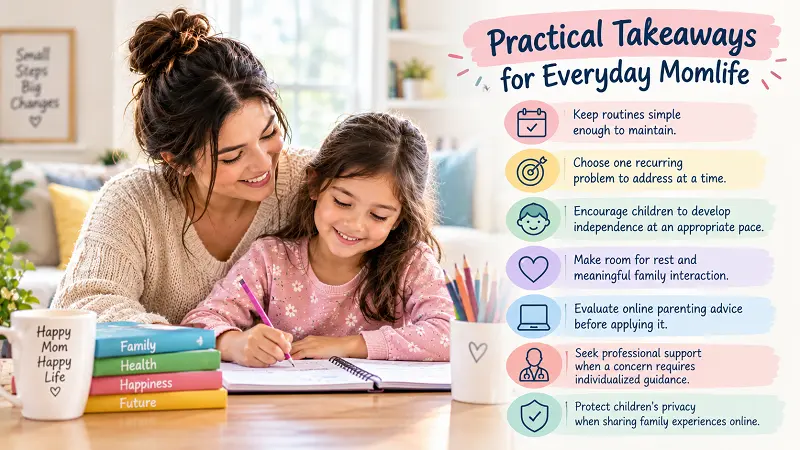
Managing motherhood becomes more realistic when parents focus on useful habits instead of perfection.
- Keep routines simple enough to maintain.
- Choose one recurring problem to address at a time.
- Encourage children to develop independence at an appropriate pace.
- Make room for rest and meaningful family interaction.
- Evaluate online parenting advice before applying it.
- Seek professional support when a concern requires individualized guidance.
- Protect children’s privacy when sharing family experiences online.
These steps will not remove every parenting challenge, but they can help families make thoughtful decisions and manage everyday responsibilities more effectively.
Conclusion
FamousParenting momlife relates to the experiences, responsibilities, and practical challenges of motherhood. Exploring this topic can help readers discover ideas for organizing family routines, supporting children’s development, and approaching common parenting situations with greater confidence.
The most useful advice is realistic, evidence-informed where appropriate, and flexible enough to account for differences between families.
Motherhood does not require following a perfect schedule or meeting every expectation. It involves learning, adapting, asking for help when needed, and finding approaches that support both children and caregivers.
Small, thoughtful changes can make everyday family life more manageable, one day at a time.
7. Frequently Asked Questions
What is famousparenting momlife?
Famousparenting momlife is a search phrase associated with motherhood, everyday parenting experiences, family routines, and the challenges of raising children. Its precise meaning depends on the context in which it is used.
What does momlife mean?
Momlife describes the daily experiences of being a mother, including childcare, household responsibilities, emotional challenges, family relationships, and the rewarding moments of raising children.
How can moms manage busy daily routines?
Moms can simplify daily routines by preparing essential items in advance, prioritizing important tasks, sharing responsibilities where possible, and maintaining flexible schedules that suit their families.
How can parents find reliable parenting advice?
Parents should check the author’s qualifications, review supporting evidence, consider their child’s age and circumstances, and consult qualified professionals for health, developmental, or safety concerns.
Why is self-care important for mothers?
Personal well-being can help mothers manage everyday responsibilities more sustainably. Rest, supportive relationships, and sharing tasks can be useful, while persistent emotional distress may require professional support. See more