Parenting is a rewarding experience, but it also comes with daily challenges. From managing morning routines to dealing with emotional outbursts, parents often need practical guidance that works in real family situations. The FPMomTips parental guide by FamousParenting is a search term associated with parenting advice about family routines, communication, child development, discipline, and children’s well-being.
The FPMomTips parental guide by FamousParenting refers to parenting advice focused on daily routines, positive discipline, communication, child development, and family well-being. Parents can use these ideas to create a supportive home, encourage independence, manage screen time, and help children build healthy habits. Individual advice should always be adjusted to a child’s age and needs.
Rather than expecting parents to follow a perfect routine, useful parenting advice should help them understand their children, respond calmly to problems, and create a healthy environment for learning and growth. Small, consistent actions can make family life easier while helping children feel secure and understood.
What Is the FPMomTips Parental Guide by FamousParenting?
FPMomTips parental guidance is generally associated online with practical ideas for raising children, managing family responsibilities, improving parent-child relationships, and handling everyday parenting concerns. The topics commonly connected with this phrase include positive discipline, emotional development, healthy routines, education, and responsible technology use.
Parents searching for this guide are often looking for simple solutions rather than complicated theories. They may want to understand how to handle a child’s behavior, create better communication, encourage independence, or balance household responsibilities with family time.
It is important to treat the phrase as a parenting-related online topic rather than a certified parenting course. Parents should check the original source and rely on qualified professionals for medical, developmental, or serious behavioral concerns.
Building a Strong Parent-Child Relationship
A healthy relationship between parents and children develops through trust, attention, patience, and everyday communication. Children need to know that they can talk about their worries, mistakes, and feelings without being immediately judged.
Parents can strengthen this relationship through small daily actions:
- Spend a few minutes talking without distractions.
- Listen to children before offering advice.
- Ask about their experiences at school or during play.
- Show appreciation for their effort and kindness.
- Make time for activities that both parents and children enjoy.
A short conversation at dinner or before bedtime can provide an opportunity to understand what a child is experiencing. The goal is not to have a perfect conversation every day but to make communication feel natural and safe.
Creating Healthy Family Routines
Children often feel more comfortable when they know what to expect. Predictable routines can help reduce confusion around sleeping, eating, school preparation, playtime, and household responsibilities.
A family routine does not have to be complicated. Parents can start with a few basic habits:
| Part of the day | Simple family habit |
|---|---|
| Morning | Prepare clothes, bags, and school items in advance |
| Breakfast | Eat together when possible and limit distractions |
| After school | Allow time to relax before homework |
| Evening | Include family time, light activities, and preparation for tomorrow |
| Bedtime | Follow a consistent wind-down routine |
Routines should remain flexible. Illness, school events, travel, and family circumstances may require adjustments. Consistency is helpful, but unnecessary rigidity can create stress.
Positive Discipline Without Constant Conflict
Discipline is not simply about stopping unwanted behavior. It is also about teaching children responsibility, self-control, respect, and decision-making.
When a child makes a mistake, parents can focus on the behavior rather than attacking the child’s character. Instead of saying, “You are always careless,” explain what needs to change and how the child can correct the problem.
Positive discipline may include:
- Setting clear and age-appropriate rules.
- Explaining expectations in simple language.
- Recognizing good behavior and effort.
- Using reasonable consequences.
- Remaining calm while correcting mistakes.
For example, if a child leaves toys scattered across the room, a parent can explain that playtime is finished until the toys are put away. This teaches responsibility without unnecessary shouting or humiliation.
The UNICEF parenting guidance also recommends positive discipline, realistic expectations, praise, redirection, and calm consequences instead of harsh punishment.
Understanding Children’s Emotional Needs
Children may experience sadness, anger, fear, jealousy, disappointment, or frustration without knowing how to explain those feelings. Their behavior sometimes communicates emotions they cannot yet express clearly.
Parents can help by acknowledging the feeling while guiding the behavior. A child who is upset about sharing a toy may need help calming down and finding a solution, rather than being told that their feelings are wrong.
Helpful responses include:
- Naming the emotion in a gentle way.
- Giving the child time to calm down.
- Listening without interrupting.
- Helping them find words for their feelings.
- Teaching simple problem-solving skills.
Emotional support does not mean allowing every behavior. Parents can accept a child’s feelings while maintaining boundaries around hitting, shouting at others, or damaging things.
Supporting Learning and School Development
Children learn through school, family conversations, reading, play, observation, and daily experiences. Parents do not need to become teachers to support their children’s education.
A supportive learning environment can include a quiet place for homework, access to age-appropriate books, and encouragement to ask questions. Children should also have opportunities to explore interests outside school, including art, sports, music, puzzles, nature, and creative activities.
Instead of focusing only on grades, parents can praise effort, curiosity, persistence, and progress. If a child struggles with a subject, try to understand the difficulty before assuming that they are lazy or uninterested.
Regular communication with teachers can also help parents identify learning challenges early and understand what support may be useful.
Encouraging Independence and Responsibility
Children gradually develop confidence when they are allowed to complete tasks and make decisions suitable for their age and abilities.
Parents can encourage independence by giving children small responsibilities, such as organizing school supplies, putting away toys, choosing between suitable outfits, helping set the table, or preparing simple snacks when appropriate.
Avoid doing every task for a child simply because it is faster. Learning takes practice, and children may need reminders or help along the way.
Giving reasonable choices also helps children feel involved. For example, a parent might ask whether the child wants to complete homework before or after a short break, while keeping the expectation that homework still needs to be completed.
Managing Screen Time and Online Safety
Technology can support learning, entertainment, and communication, but children also need time for sleep, physical activity, conversation, and offline play.
Instead of relying only on strict time limits, parents should consider the type of content children use, their age, how devices affect their behavior, and whether screen use is interfering with daily responsibilities.
Practical digital parenting habits include:
- Establish screen-free times during meals and family conversations.
- Avoid keeping entertainment devices in the bedroom at bedtime when possible.
- Choose age-appropriate content.
- Talk about privacy, strangers, online behavior, and personal information.
- Use parental controls as an additional safety measure.
- Make digital rules that adults follow as well.
Parents should also watch for changes in sleep, mood, schoolwork, or social activities that may be connected to technology use. A family media plan works better when children understand the rules and have an opportunity to participate in setting them.
Promoting Healthy Habits and Physical Well-Being
Healthy habits begin with the everyday choices children observe at home. Regular meals, adequate sleep, physical movement, hygiene, and time outdoors can support their overall well-being.
Parents can make these habits easier by keeping expectations realistic and involving children in family activities. Walking together, preparing meals, playing outside, reading before bed, and keeping regular sleep routines are simple ways to encourage a balanced lifestyle.
Young children also need safe spaces to explore, play, and learn. Their daily environment should offer opportunities for movement, interaction, curiosity, and rest.
For questions involving nutrition, illness, sleep difficulties, or developmental concerns, parents should seek advice from qualified health professionals rather than depending solely on general online articles.
Helping Children Develop Social Skills
Social skills help children build friendships, communicate respectfully, share experiences, and resolve disagreements. These abilities develop gradually through practice and guidance.
Parents can support social development by encouraging children to listen, take turns, respect differences, apologize when necessary, and express disagreement without hurting others.
Simple activities such as playing board games, working on a shared project, helping a sibling, or participating in group activities can provide opportunities to practice cooperation.
When a disagreement occurs, avoid immediately solving every problem for the child. Give them an opportunity to explain what happened and think about possible solutions. Step in when safety, bullying, or serious conflict requires adult intervention.
Taking Care of Parents’ Well-Being
Parenting can become exhausting when adults try to manage every responsibility without support. Parents also need rest, emotional support, personal time, and realistic expectations.
Taking care of yourself does not mean neglecting your children. It helps you manage stress and respond more thoughtfully to difficult situations.
Consider these simple practices:
- Ask trusted family members for help when needed.
- Divide household responsibilities fairly.
- Take short breaks when possible.
- Maintain supportive friendships.
- Seek professional help when stress becomes difficult to manage.
A calm and supported caregiver is better positioned to provide a stable and caring environment. Parents do not need to handle every challenge alone.
How to Apply Parenting Advice in Everyday Life
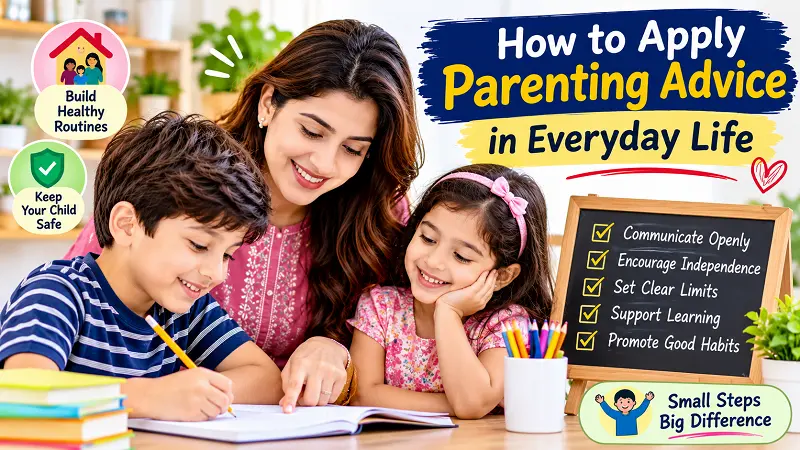
Reading parenting tips is useful, but applying too many changes at once can become overwhelming. Start with one issue that matters most to your family.
If mornings are stressful, prepare school items the night before. If arguments happen around devices, create a family screen rule. If your child struggles to express emotions, spend a few minutes each day listening without rushing to correct them.
Review the change after a reasonable period and adjust it if necessary. Parenting strategies should fit the child’s age, personality, developmental needs, and family circumstances.
The most useful advice is not necessarily the most complicated. It is the advice that families can apply consistently, safely, and realistically.
Final Thoughts
The FPMomTips parental guide by FamousParenting is a parenting-related search topic that reflects a common need for straightforward advice on raising children in a busy modern world. Families need practical support with routines, emotional development, discipline, learning, technology, and their own well-being.
Parents can make meaningful progress by focusing on connection, reasonable boundaries, consistency, and age-appropriate responsibility. No family follows a perfect routine every day, and children do not develop in exactly the same way.
A supportive home is built through small daily efforts. Listening, encouraging, guiding, and making time for children can help create a family environment where everyone has room to learn and grow.
Frequently Asked Questions
What is the FPMomTips parental guide by FamousParenting?
It is a parenting-related topic that covers practical family advice, including child development, communication, daily routines, discipline, and children’s well-being. Parents can use these ideas to improve everyday family life.
What are the main principles of the FPMomTips parenting guide?
The main themes include patience, consistent routines, positive communication, appropriate boundaries, emotional support, and encouraging children to become independent.
How can parents improve their relationship with their children?
Parents can build stronger relationships by listening carefully, spending quality time together, respecting children’s feelings, and communicating openly without unnecessary criticism.
How can parents manage children’s screen time?
Create reasonable family rules, choose age-appropriate content, establish screen-free periods, and encourage offline activities such as reading, sports, outdoor play, and creative hobbies.
Is FPMomTips a certified parenting program?
The phrase is associated with online parenting content. However, I could not independently verify a formally accredited parenting course, certification, or official professional endorsement connected with this specific guide.
Is online parenting advice enough for child development concerns?
No. General parenting articles can help with everyday situations, but concerns about a child’s health, behavior, emotional well-being, or development should be discussed with a qualified professional. see more